From the ambitious Fábrica de Agua initiative to the ecological transformation of Lake Texcoco, discover how Mexican architect Daniel Holguín is shaping a new era of sustainable architecture, environmental regeneration, and innovative urban design.
In a world where architecture is often celebrated for its spectacular silhouettes, extraordinary materials, and visual impact, Mexican architect Daniel Holguín is pursuing something far more meaningful: designing spaces that transform the way people experience and interact with the natural world.
As the founder and creative director of Multiplicities, a Mexico City-based architecture and urban design practice, Holguín is part of a new generation of creative visionaries challenging conventional ideas of what architecture can accomplish.
His work moves beyond buildings, embracing landscapes, ecological systems, public spaces, and the relationship between cities and their surrounding environments. Rather than seeing nature as something to build around, Holguín approaches it as an essential part of the architectural experience.
At the heart of his philosophy is a powerful idea: exceptional architecture should not simply occupy a place. It should improve it.
Fábrica de Agua: Reimagining the Future of Water in Mexico
Among the most compelling initiatives associated with Holguín’s work is Fábrica de Agua, an exploration of how water infrastructure can be transformed into beautiful, functional, and environmentally restorative public spaces.
In Mexico City, where water scarcity, seasonal flooding, and urban expansion present increasingly complex challenges, this approach represents an important shift in architectural thinking.
Traditionally, water infrastructure has been treated as something purely functional, often hidden beneath streets or separated from everyday urban life. Fábrica de Agua proposes a different possibility: bringing water back into the public realm and allowing infrastructure to become part of the city’s cultural, ecological, and social identity.
The initiative explores how architecture, landscape design, and environmental engineering can work together to create spaces that support water management while offering new opportunities for recreation, education, and community interaction.
What makes the vision especially compelling is its ability to unite technical necessity with architectural imagination. Water becomes more than a resource to manage. It becomes a defining element of place.
Through this approach, Holguín demonstrates how some of the most urgent environmental challenges facing modern cities can also inspire extraordinary design innovation.
Parque Ecológico Lago de Texcoco: Architecture on a Monumental Scale
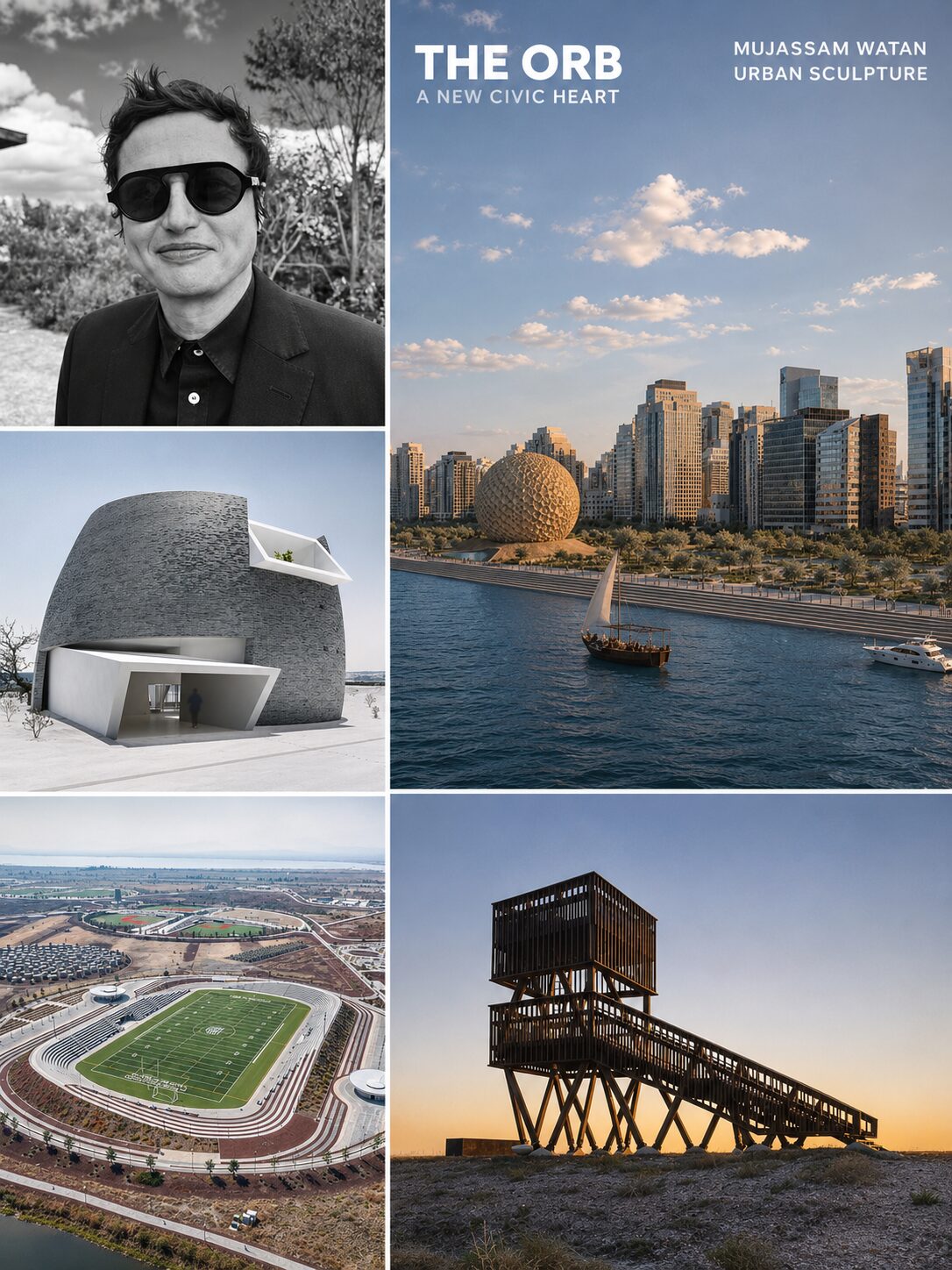
One of the most significant projects in Holguín’s architectural career is his involvement in the Parque Ecológico Lago de Texcoco, an ambitious ecological and public-space initiative located northeast of Mexico City.
The project represents an extraordinary effort to reimagine a historically important landscape that has experienced centuries of environmental transformation.
Working within the larger project led by architect Iñaki Echeverría, Holguín served as director of architecture, helping develop the architectural components of a vast ecological landscape.
The vision extends far beyond the creation of a conventional park. It brings together environmental restoration, wetlands, recreational spaces, pathways, public facilities, and landscape interventions designed to reconnect the metropolitan region with its ecological history.
For Holguín, architecture within this context becomes an instrument of connection, linking people to the land, water, and natural systems that have shaped the Valley of Mexico for generations.
The significance of the project lies not only in its impressive scale, but also in its underlying philosophy. Rather than imposing architecture upon the landscape, the design seeks to establish a dialogue between the built environment and the natural world.
It is a compelling example of how contemporary Mexican architecture can contribute to environmental resilience while creating meaningful public experiences. And perhaps most importantly, it demonstrates that architectural ambition does not always need to be measured by height, luxury, or monumentality. Sometimes, its greatest achievement is the restoration of something that was nearly lost.
Beyond Texcoco: A Diverse Portfolio of Architectural Innovation
While his contributions to large-scale environmental projects have become an important part of his architectural identity, Holguín’s creative experience extends into residential design, cultural spaces, and projects that explore the relationship between architecture and community.
Through Multiplicities, he has developed an approach that brings together contemporary design, environmental awareness, and a sophisticated understanding of how people inhabit spaces.
Stardust: Reinventing Residential Architecture in Mexico City
In Mexico City’s vibrant Condesa neighborhood, Stardust offers an intimate expression of Holguín’s architectural sensibility.
Completed in 2019, the project involved the renovation of a house originally designed by acclaimed Mexican architect Oscar Hagerman. Rather than erasing the building’s identity, Holguín and his design team embraced its architectural history while introducing a contemporary perspective.
The residence was reconfigured to function either as one complete home or two independent apartments, creating flexibility without sacrificing architectural character.
Black terrazzo with marble aggregates establishes a striking visual continuity between interior and exterior spaces, while cantilevered staircases, terraces, and connecting walkways introduce a sculptural quality.
A central courtyard becomes an essential organizing element, connecting the architecture through light, movement, and spatial relationships.
The result is a sophisticated example of adaptive reuse, where architectural preservation and modern living exist in harmony. Stardust reveals another dimension of Holguín’s talent: the ability to approach smaller, highly detailed spaces with the same creativity and consideration that define his larger environmental projects.
The New Law Library of Harlem: Architecture with a Social Purpose
Beyond Mexico, Holguín’s architectural work has also engaged with the cultural and social landscape of New York. The New Law Library of Harlem is an especially meaningful example.
Conceived as a community-centered space dedicated to legal education, access to information, and empowerment, the project reflects a belief that architecture can contribute to a more inclusive society.
The design received recognition from the American Institute of Architects New York Chapter in 2014, as well as honors from the International Interior Design Association and American Library Association.
More than a conventional institutional project, the New Law Library of Harlem demonstrates how thoughtful architecture can help create environments that encourage learning, connection, and opportunity.
For Holguín, this kind of work illustrates a defining principle: architecture has the potential to serve people in ways that extend far beyond its physical boundaries.
Multiplicities: A Creative Practice Without Boundaries
At the center of Holguín’s creative universe is Multiplicities, his multidisciplinary architecture and design practice.
The studio works across architecture, interior design, landscape, hospitality, residential environments, cultural spaces, and urban strategy. What distinguishes the practice is its ability to approach each project as part of a larger system.
A building is never simply a building. It exists within a neighborhood, a landscape, an ecological environment, and a community.
Through this perspective, Multiplicities seeks to develop places that are visually compelling while remaining responsive to their surroundings.
The studio’s work also reflects an evolving understanding of luxury. Today, exceptional design is increasingly defined not only by beautiful materials and architectural distinction, but by authenticity, sustainability, and a genuine connection to place.
These values are particularly relevant to Mexico’s growing design and hospitality landscape, where contemporary architecture is finding new ways to celebrate local identity and the natural environment.
Holguín’s approach suggests that the most sophisticated spaces of the future will be those that balance aesthetic excellence with environmental intelligence.
The Art of Designing with Nature
There is a certain elegance in architecture that understands when to make a statement and when to allow the landscape to speak for itself. This balance is central to Holguín’s work.
Whether reimagining a residential property in Condesa or contributing to the transformation of the Lake Texcoco landscape, his projects demonstrate an appreciation for context, history, and the possibilities of thoughtful design.
His architectural language is not confined to one recognizable aesthetic. Instead, it evolves according to the needs, character, and opportunities of each location. This adaptability is one of his greatest strengths.
Where some architects establish their identity through repetition, Holguín’s work is distinguished by exploration.
He approaches architecture as an ongoing conversation between human creativity and the environments we inhabit. In doing so, he challenges the traditional boundaries between architecture, landscape, engineering, and environmental design.
The Orb: A New Civic Landmark for Dammam
Extending this vision beyond Mexico, The Orb (Mujassam Watan) is a proposed waterfront landmark in Dammam, Saudi Arabia, where sculptural architecture meets environmental innovation. Conceived as a striking spherical structure, the project reimagines essential water infrastructure as a destination for culture, education, and public life.
Designed to combine a Museum of Water with a desalination facility, The Orb would invite visitors to explore the transformation of seawater into potable water while engaging with the history and significance of water in the Arabian Peninsula.
The proposal reflects the same architectural ambition found throughout Holguín’s work: making sustainable infrastructure visible, accessible, and meaningful to the communities it serves.
A Mexican Architect with an International Perspective
With an educational background that includes Columbia University’s Graduate School of Architecture, Planning and Preservation, Holguín brings an international perspective to his architectural practice.
His work reflects the influence of global design conversations while remaining closely connected to Mexico’s distinctive environmental and cultural landscape.
This combination allows him to approach complex challenges with both creative ambition and sensitivity to place.
His contributions to the Parque Ecológico Lago de Texcoco and his continuing exploration of water-sensitive urban design position him within an important conversation about the future of architecture in Mexico.
On November 18, 2026, Holguín is scheduled to participate in Fábrica de Agua / Mexico City: New Futures at New York University, alongside Multiplicities collaborator Dan Perlin and environmental studies scholar Dean Chahim.
The discussion will explore how architecture and ecological infrastructure can help cities respond to environmental challenges while creating meaningful public spaces.
Designing a More Beautiful Future
What makes Daniel Holguín’s work especially compelling is not simply his ability to create remarkable architecture, but his willingness to question what architecture should accomplish.
His projects invite us to imagine a future in which cities are more connected to their natural environments, public spaces offer greater opportunities for community life, and design becomes an active participant in environmental restoration.
From the monumental landscapes of Texcoco to the intimate architectural details of Stardust, his work reflects creativity, intelligence, and an understanding of the responsibility that comes with shaping the built environment.
For INMEXICO, Holguín represents an inspiring vision of contemporary Mexican design: ambitious yet thoughtful, internationally minded yet deeply connected to place, and driven by the belief that architecture can create meaningful change.
As Mexico continues to establish itself as an influential destination for architecture, art, and design, creative minds like Daniel Holguín remind us that the most extraordinary spaces are not always those that demand our attention.
Sometimes, they are the ones that transform how we see the world around us. And that may be architecture’s greatest achievement.