

Infrastructure, healthcare, international connectivity and global investment are reshaping one of Mexico’s most closely watched luxury destinations.
Short-term headlines come and go, but Tulum’s long-term story is being shaped by something more substantial. Infrastructure, environmental investment, improved connectivity and growing confidence from major international brands are driving its next chapter.
In 2026, several significant projects are moving forward at the same time, from a multibillion-peso strategy to address sargassum to new healthcare infrastructure, returning international flights, new year-round amenities and the development of Faena Tulum.
Together, they point toward a destination entering a more mature phase of growth.
Why Is Tulum’s Outlook Changing in 2026?
Tulum is evolving beyond its identity as a seasonal beach destination. New infrastructure is addressing some of the challenges created by rapid growth while improving everyday life for residents, travelers and homeowners.
The changes currently underway include:
- More than 2.6 billion pesos committed to the broader strategy against sargassum
- Eight international seasonal routes returning to Tulum International Airport for winter 2026–27
- A new private hospital on Avenida Cobá
- Tulum’s first Cinépolis movie theater
- Continued construction of the Faena Tulum hotel and residential district
Rather than one isolated project, it is the combination of these investments that makes Tulum’s current evolution significant.
Mexico Is Investing Billions to Address Sargassum in the Mexican Caribbean
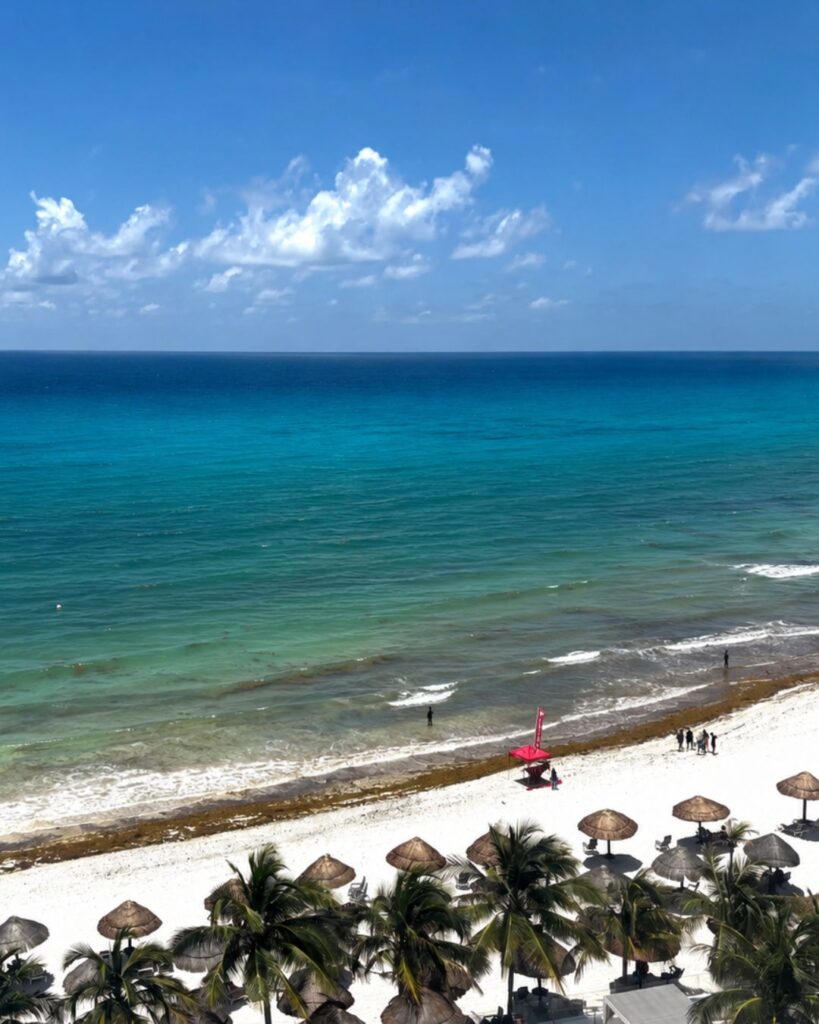
Sargassum has become one of the most visible environmental challenges facing Tulum and the wider Mexican Caribbean.
In July 2026, Mexico presented an expanded strategy designed to shift more of the response from cleaning beaches to intercepting sargassum before it reaches the coast.
The broader program represents more than 2.6 billion pesos in investment and includes additional specialized collection vessels, tugboats, offshore containment barriers, monitoring and expanded collection capacity. Current plans include approximately 50 kilometers of containment barriers across priority areas that include Tulum, Cancún, Playa del Carmen, Puerto Morelos and Mahahual.
Why Does the Sargassum Investment Matter for Tulum?
The strategy addresses both an environmental challenge and an economic one.
Tulum’s beaches are central to the destination’s tourism economy, but the new approach increasingly focuses on capturing the macroalgae at sea and exploring ways to reuse it through circular-economy applications rather than relying predominantly on shoreline cleanup.
Sargassum will remain a natural phenomenon affecting the Caribbean. What is changing is the scale and sophistication of the response.
Tulum International Airport Is Rebuilding Global Connectivity
Tulum International Airport has already transformed how travelers reach the southern Riviera Maya, and its international network is set to strengthen again during the 2026–27 winter season.
Eight seasonal international routes are scheduled to return, with airlines including United, Air Canada, Air Transat and WestJet restoring service connecting Tulum with cities in the United States and Canada.
Toronto, Montréal, Québec City, Calgary and Newark are among the markets included in the returning network, with services beginning across the winter schedule from late October 2026.
What Does Better Air Connectivity Mean for Tulum?
For travelers, it means easier direct access to the destination.
For homeowners and hospitality businesses, stronger air connectivity can support longer stays, second-home use and international tourism demand.
And for Tulum itself, the continued development of Felipe Carrillo Puerto International Airport reinforces something important: the destination is becoming more directly connected to the markets that already represent a significant part of its international audience.
Hospital Joya Tulum Will Expand Access to Advanced Healthcare
One of the most important signs of Tulum becoming a more established year-round community has little to do with tourism.
Hospital Joya Tulum is currently under construction on Avenida Cobá, one of the city’s principal corridors.
The private project represents an investment of more than 350 million pesos and is being developed across more than 9,000 square meters. Plans include advanced medical services and intensive-care capabilities, with the opening currently targeted for December 2026.
For a destination attracting not only tourists but also full-time residents, families, second-home owners and international buyers, access to more sophisticated healthcare is an important part of long-term urban development.
Tulum’s First Cinépolis Adds a New Year-Round Amenity
Tulum’s evolution is also becoming visible in everyday life.
Centro Tulum, the city’s first major shopping center, is expected to begin opening between September and October 2026 with approximately 60 commercial spaces.
Confirmed brands include Chedraui, Smart Fit, Starbucks, Toks, Coppel and, importantly, Cinépolis — Tulum’s first movie theater.
A movie theater may appear minor compared with an airport or hospital, but it represents something larger.
Destinations become mature communities when residents can live more of their daily lives locally. Retail, entertainment, healthcare, transportation and services all contribute to making Tulum less dependent on Playa del Carmen or Cancún for everyday needs.
Faena Tulum Signals Long-Term Confidence in the Luxury Market
Perhaps one of the clearest private-sector signals comes from Faena Tulum.
Construction is underway on a destination that brings together branded residences, hospitality, wellness, culture and lifestyle experiences within a larger master plan.
Faena’s plans include 147 residences, a hotel, Tierra Santa Healing House, an ocean club and cultural and hospitality spaces conceived around the brand’s distinctive approach to art, architecture and experiential luxury.
Current project marketing points toward a winter 2027 delivery window for the residences, while the broader Faena district continues taking shape.
For Tulum, the importance goes beyond another luxury development.
Faena has built an internationally recognized hospitality and lifestyle presence across destinations including Miami Beach, Buenos Aires and New York.
Its continued investment in Tulum reflects confidence in the destination’s ability to attract a global luxury audience over the long term.
Tulum Is Growing Up, Not Slowing Down
Tulum has never been a destination without challenges.
Rapid development, environmental pressures and seasonality remain part of Tulum’s story. But resilient destinations do more than face challenges; they adapt, invest and evolve.
In 2026, Tulum is entering a new chapter driven by stronger infrastructure, environmental investment, international connectivity, expanded healthcare, year-round amenities and a more sophisticated global hospitality landscape.
And throughout that transformation, the elements that originally made Tulum extraordinary remain: nature, architecture, wellness, creativity, gastronomy and a community that attracts people from around the world.
At InMexico, we see Tulum not simply as a destination expanding outward, but as one becoming more complete.
Tulum is growing up, not slowing down.
For travelers, homeowners and those looking closely at the destination’s future, the foundation is becoming stronger with every new layer of infrastructure and investment.
For more stories on Tulum, luxury travel, hospitality and the people shaping Mexico’s most inspiring destinations, follow @in.mexico on Instagram.